Sub-$20,000 enthusiast cars used to be a bottomless category. Manual transmissions were everywhere, RWD coupes were attainable, and the depreciation curve was still steep enough that an eight-year-old hot hatch was a $9,000 car instead of a $14,000 car. That market, broadly, no longer exists. The supply has thinned, the prices have hardened, and what's left is a small group of cars that are both cheap and meaningfully fun. Most of those cars are already in your driveway, and most of them are worth keeping.
The thesis
Two structural changes have made cheap enthusiast cars more interesting to hold:
One: the supply is shrinking. Manual transmissions are disappearing fast. The 2024 Civic Type R is the last manual Honda will sell in Canada in volume. The 2024 Tacoma is the last manual Toyota truck. The Miata and the BRZ/86 twins are the last sub-$40k RWD manual coupes available new, and one of those (the Miata) is more than 35 years old as a nameplate. The car you bought in 2018 is, in most cases, a kind of car nobody is making new anymore.
Two: the next rung up is more expensive than it used to be, in real terms. The Civic Si used to step up to a Type R for $8-10k. The new Type R is $52,000 in Canada. The Miata used to step up to a Cayman or 370Z; both have moved up a tier in price. The "natural upgrade" path that worked five or ten years ago has stretched. Trading your $14k Si for a $30k 86 used to be a reasonable side-step; it's now an upmove that costs $16k of cash you might not need to spend.
Six cars worth keeping
1. NA, NB, NC, and ND Mazda Miata (any). If you have a Miata, you have the right car. The ND2 (2019+) is the best one ever made. Every generation behind it is a known platform with a deep enthusiast aftermarket and predictable mechanicals. A pre-2019 Miata is also still under $20,000 even now, which is a remarkable price for a properly engineered RWD manual two-seater. Keep it.
2. Subaru BRZ / Toyota 86 / Toyota GR86 (any year). The original BRZ/86 launched at $25k Canadian in 2013; clean examples are still $14-19k thirteen years later. The newer 2.4L cars are $32-38k new. Either generation is the only naturally aspirated RWD coupe near this price. There is no successor planned that doesn't go up-market.
3. Honda Civic Si (any 2014+). The Si is the smartest sport-compact in the market. The 9th gen and 10th gen are getting cheap; the 11th gen is the most refined. All of them have the same core advantages, Honda reliability, real fun on a winding road, daily-driver practicality, and the same long-term residuals that make Civics historically the strongest holders in their class.
4. Volkswagen GTI (Mk6, Mk7, Mk7.5). Less reliable than the Honda, more interesting. The Mk7 GTI especially is the most balanced hot hatch ever sold in volume. Used Mk7s in Canada are at the bottom of their depreciation curve right now. Catch a clean one with the Performance Pack and you have a genuine driver's car for the price of a base Corolla.
5. Ford Mustang GT (S550, 2015-2023). A 5.0L V8, RWD, manual available, in a coupe that's still made (for now). The S550 is the last Mustang that wasn't trying to be a track special; it's a daily-able V8 muscle car at a price that V8 Mustangs will not see again. Clean 2018-2020 GTs in Canada are $32-42k; that's already cheap and getting cheaper as buyers move to the new model.
6. BMW 135i / 235i (E82, F22). The closest thing to a modern small BMW that hasn't been ruined yet. The N54 in the 135i is the famously tunable inline-six; the F22 235i with the N55 is a more refined daily but with similar character. Maintenance-intensive, but parts are cheap and the indie network in Toronto is solid. A clean 235i M Sport is $28-34k right now, lower than it has been in five years.
The math vs. upgrading
Let's run the numbers on a typical "should I upgrade my Miata" scenario. You bought an ND2 Miata in 2020 for $32,000. It's worth $26,000 now. You're considering trading for a 2024 Cayman GTS at $115,000.
Here's the math:
- Trade-in value: $26,000 (might get $24k from a dealer trade)
- Cayman cost: $115,000 + tax + plates ≈ $134,000
- Net cash: $108,000-$110,000
- Insurance delta over 5 years: roughly $4,000-$6,000 more for the Cayman
- Maintenance/tire delta over 5 years: roughly $8,000-$12,000 more for the Cayman
- Depreciation over 5 years: $115k Cayman drops to roughly $75k. The Miata might drop to $20k. Net depreciation cost difference: $40k-vs-$6k = $34k
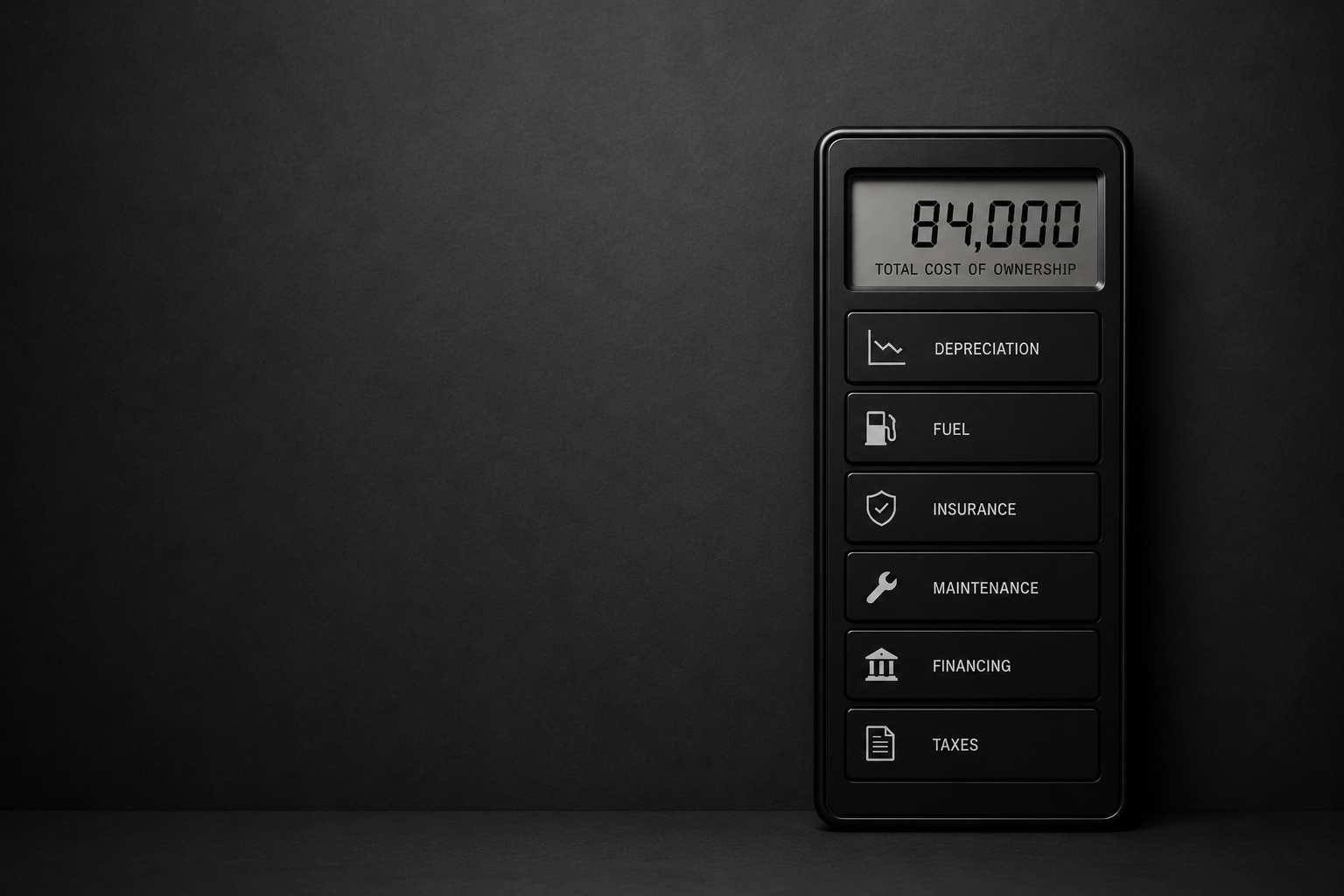
Total five-year cost of the upgrade: $108k cash + $5k insurance + $10k maintenance + $34k depreciation ≈ $157,000 over what you'd have paid keeping the Miata.
For the question "is the Cayman 5x better than the Miata?", most honest owners say no. The Cayman is meaningfully better. It's not five times better. Most of the joy of the Miata is intact in the new ones (the new GTS car especially), but the experience-per-dollar gap is brutal. If your goal is "drive a properly engaging car on weekends," the Miata is doing 80% of the job for 5% of the budget.
The same math applies, more or less, to most of the six cars on the list above. The natural upgrade path costs four to ten times more for an experience that is two to three times better. That's not a great trade.
When to sell anyway
Three legitimate reasons to upgrade out of a cheap enthusiast car:
One: the family math has changed. Two car seats don't fit in a Miata. A Civic Si is fine for one kid, awkward for two. The Cayman doesn't replace a Miata in this scenario, but the wagon path or the sport sedan path do. If the brief is now "fun car that fits a family", the upgrade is real.
Two: the maintenance has gone past your tolerance. A 200,000 km Mk6 GTI eventually starts asking for $3-4k a year in maintenance even when you do most of it yourself. If that's not fun anymore, that's a real reason to step out. The replacement should be something less needy at a similar price tier (the Miata, BRZ, and Si are all less needy than a GTI).
Three: you actually want the next-tier experience. Some people genuinely will get more out of a Cayman than a Miata. They drive the right roads, on the right schedule, and the additional capability matters. That's a defensible upgrade. But it's a much smaller fraction of the people considering it than the conversations would suggest.
If you're not in one of those three categories, the right move is almost always to keep the cheap enthusiast car you have, address the deferred maintenance, and put the saved cash somewhere else. Subscribe to The Carsmenskii Brief if you want this analysis applied to your specific situation as it changes.

Founder of Carsmenskii. BMW Group Canada Aftersales 2018–2021. Talks more clients out of upgrades than into them — the "keep" math is the math people skip. Book a 15-min call if you're weighing trading up versus holding the car you have.