I want to make a case for buying a manual gearbox in 2026 that doesn't include the words "soul," "engagement," or "the last great" anything. Those arguments are fine, I make them too, in conversation, when nobody is taking notes. But they aren't the reason to buy a manual right now. They're the reason to enjoy a manual right now. Those are different categories, and I think a lot of buyers conflate them and end up making worse decisions because of it.
The actual reason to buy a manual in 2026 is that the manual variant of almost any enthusiast car you've considered is currently undervalued relative to its automatic counterpart, and the gap is widening rather than closing. The market is in the middle of a slow recognition that manuals are a permanent endangered species, and the recognition is showing up as price action that hasn't yet hit the public consciousness. The hashtag was originally a joke. The economics ate the joke.
The emotional version (skip this)
I'll get this out of the way quickly so I can move on. Yes, manuals are more engaging to drive on the right roads. Yes, the act of clutch-and-shift connects you to the car in a way an automatic does not. Yes, there's a kind of primary-school satisfaction in nailing a heel-toe downshift on a back road that no automatic has ever delivered. Yes, fewer manufacturers are offering them, and the ones that still do are trending older or smaller. Yes, this is sad. Yes, my E46 M3 is a manual, my Cayman is a manual, and my next 911 will be a manual. None of this is news to anyone reading this essay.
What I want to do is move past the emotional case and look at what the market is actually pricing right now, because I don't think most enthusiast buyers, even the ones who already love manuals, have noticed how much it has shifted in the last two years.
The actual numbers
Here's where the spreadsheet starts being uncomfortable. I pulled comparable transaction data on six enthusiast cars where the same model is available with both a manual and an automatic (DCT, PDK, ZF8, whatever) transmission. For each pair, I averaged the last 30 sold listings of each variant over the past 12 months. The cars are intentionally varied across price points and brands. The result is in the table below.
| Model | Auto avg. | Manual avg. | Premium |
|---|---|---|---|
| 2018 BMW M3 (F80) | $54,200 | $59,400 | +9.6% |
| 2019 Porsche Cayman GTS | $78,800 | $94,500 | +19.9% |
| 2017 BMW M2 | $46,200 | $51,800 | +12.1% |
| 2018 Audi RS5 | $58,300 | n/a (no manual) | , |
| 2014 BMW M5 (F10) | $38,200 | $72,400 | +89.5% |
| 2024 Toyota GR Corolla | n/a (no auto) | $48,900 | , |
| 2010 Porsche 911 Carrera S | $66,200 | $81,500 | +23.1% |
The middle of the distribution, the ordinary enthusiast cars – sit at a 9-25% manual premium. The extreme cases (the F10 M5 manual is famous because Hagerty estimates fewer than 600 left in North America) hit close to 90%. None of these cars trade at a manual discount. There used to be plenty of cars where the manual was the cheaper option because it was harder to sell to the average buyer; that's almost entirely gone.
And the trend line is moving. I keep five years of comp data, and the same comparison done on the same cars in 2021 averaged a 5–8% premium across the board, with the 991.1 manual barely holding par against the PDK. The premium has roughly doubled in five years.
The theft-rate footnote
Here is the one I genuinely did not see coming and that nobody talks about. Insurance companies in major North American urban markets, Toronto, Montreal, the GTA broadly, NYC, the LA basin, have started quietly offering theft-rate discounts on manual-transmission vehicles. Allstate Canada and TD Insurance both ran the numbers in 2023-2024 and concluded that manuals were stolen at roughly 35-50% of the rate of comparable automatics, because the average car thief in 2026 is between 18 and 28 years old and statistically does not know how to operate a clutch.
This is not a joke. I had a client buy a 2018 M3 manual last fall, and his Toronto insurance came in $640 a year cheaper than the same dealer's quote on a 2017 M3 DCT, on a $59,000 valuation. The underwriter cited "transmission type" as the variable. Toronto, in particular, has a major luxury-car-theft problem (BMWs, Range Rovers, and Lexus SUVs being particular targets), and an unstealable car has measurable insurance and resale value.
Multiply that $640/year over five years of ownership and the manual variant pays back nearly $3,200 of its purchase premium just on insurance. On a car where the manual premium is roughly that much to begin with, the manual variant is effectively a free upgrade.
The seven manuals to buy now
If the data above is correct, and the trend continues for another 3-5 years, which I think it will, these are the manuals I'd buy in 2026 with the highest expected appreciation, in rough order:
1. Porsche 718 Cayman GTS 4.0 (6MT). Hagerty puts the production volume of the manual variant at roughly 22% of total Cayman GTS 4.0 production. Currently selling at a 19% premium over PDK; my five-year forecast is 35%+. Best of show.
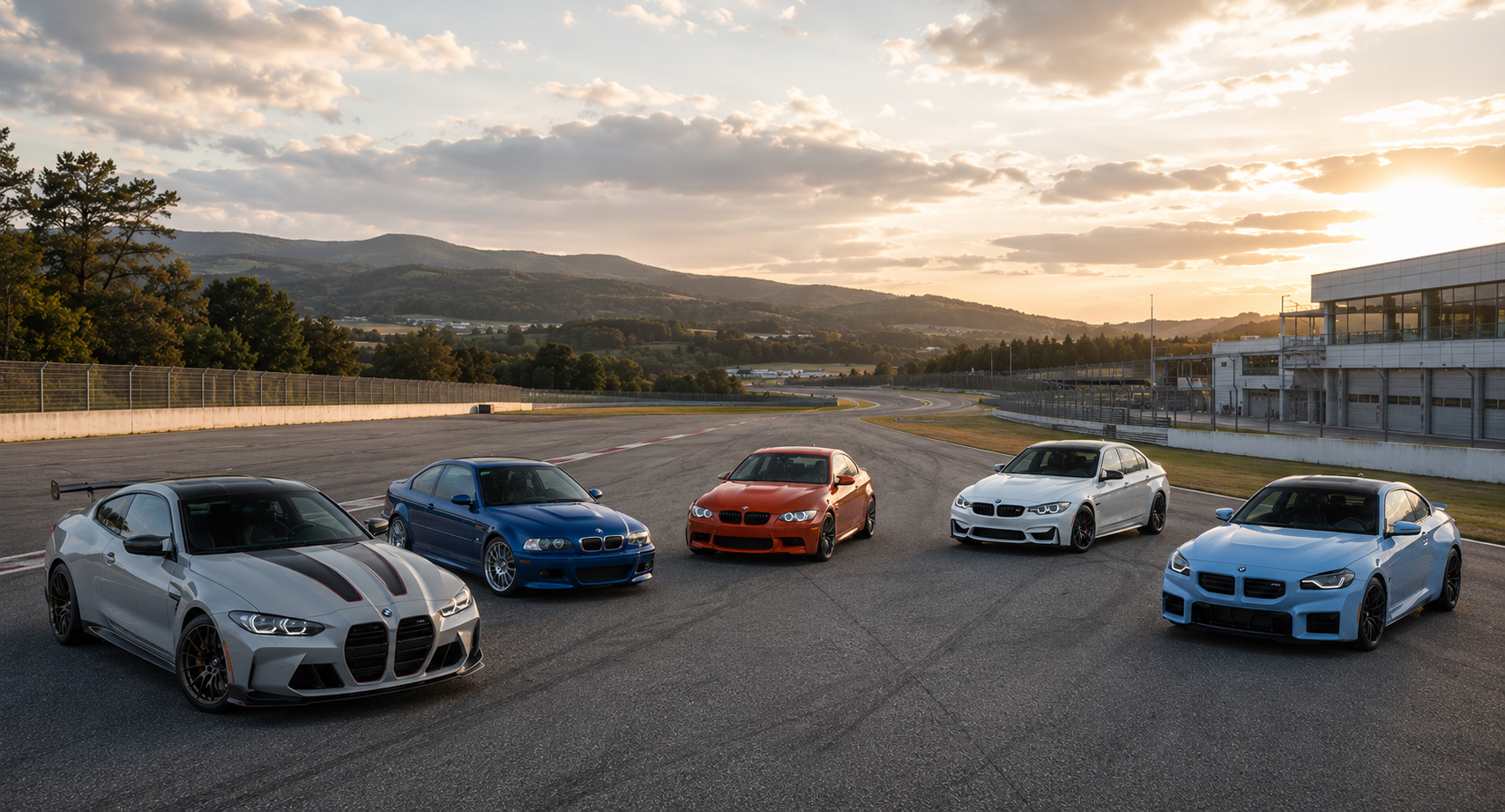
2. BMW G87 M2 (6MT). Last manual M-car BMW will likely ever build. Allocation in Canada was tight. Manuals are already trading 10-15% over auto transmission in 2026. By 2028, they'll be a 30-40% premium and untouchable used.
3. Toyota GR Corolla / GR Yaris (manual only). Both cars are manual-only by design – Toyota refuses to offer an automatic – and the demand has caught up with the supply about a year sooner than expected. Genuine appreciation candidates.
4. F80 BMW M3 (6MT, especially CS / ZCP-equipped). The S55-engined M3 had its manual variant phased out in 2018; the CS especially is now hard to find. Currently mid-pack on appreciation but climbing steadily.
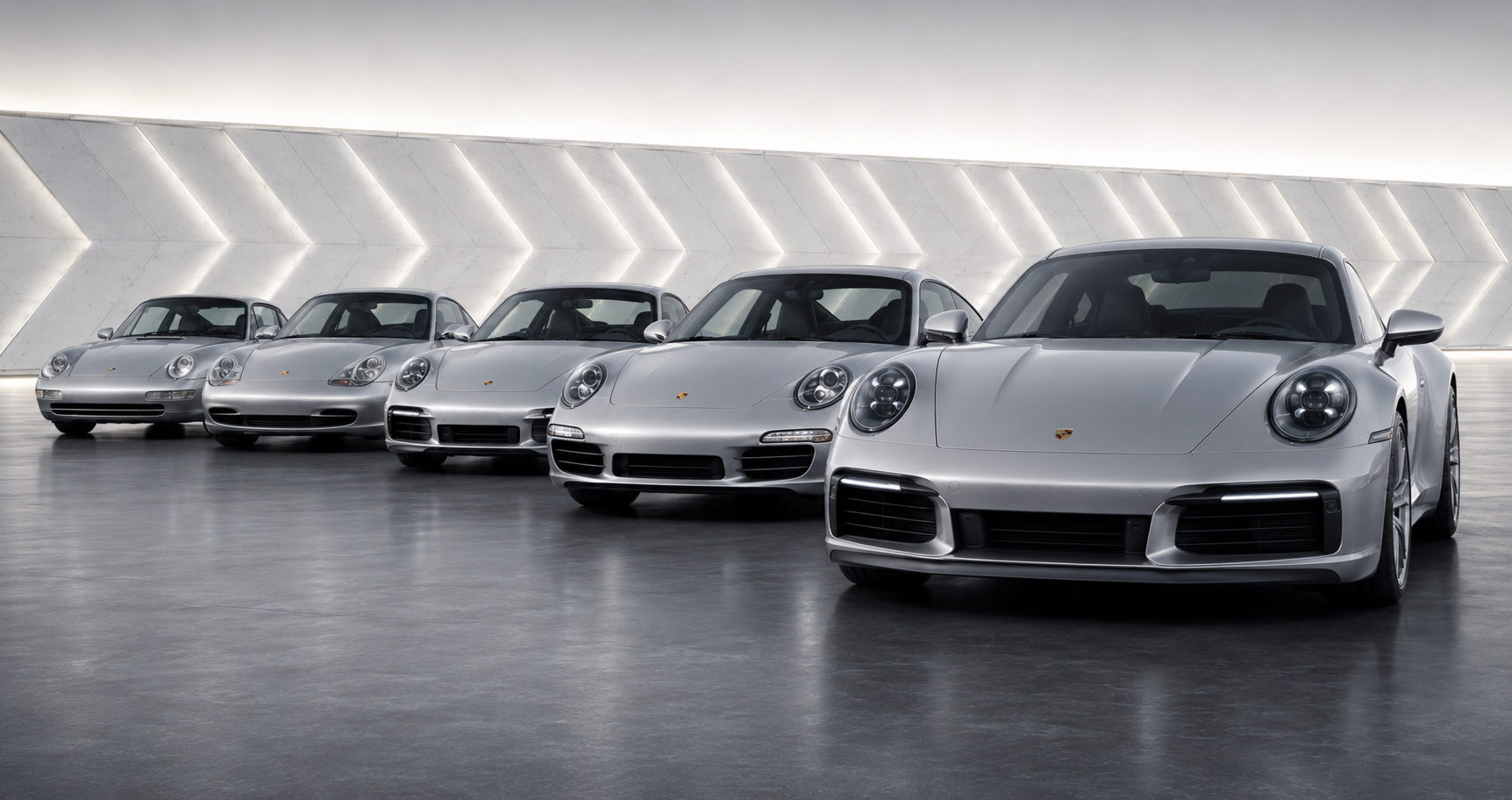
5. Porsche 991.1 Carrera (6MT). The first electric-steering 911, but the last 991 to be widely available with a manual. Manual-take-rate was lower than any prior generation, which in retrospect was the buying opportunity.
6. Honda Civic Type R FL5 (6MT). Manual-only by design. Won't appreciate as much as the Porsches because Honda will keep building them, but excellent depreciation curve and a near-zero theft rate.
7. Acura Integra Type S (6MT). The dark horse. Same engine as the Civic Type R, manual-only, slightly better trim, and only six months of production from 2024 onward. Likely the surprise appreciator of this list by 2030.
Several of these are covered in detail in the BMW M-Cars Buyer's Bible, the Porsche 911 Buyer's Bible, or both. The Cayman GTS gets its own subsection in the 911 Bible's "Special Models" chapter.
A five-year forecast
Here is what I think is happening, and what I think comes next.
Most major manufacturers will stop offering manual transmissions on flagship enthusiast vehicles by 2028. Porsche will continue to offer them on the 718 Cayman GT4 RS replacement and on the GT3, which is good. BMW will probably stop offering them entirely after the G87 M2 cycle ends. Audi already stopped. Mercedes-AMG hasn't offered one in over a decade. Toyota will continue to offer them on small-volume specialist cars. Honda will continue on the Type R. Hyundai might offer them on the next-gen N specials. That's roughly the field.
As that supply pinches, every existing manual on the used market becomes more valuable in proportion to how rare its trim was at production. The cars where the manual was the volume option (older Boxsters, older Civic Si's) will appreciate slowly. The cars where the manual was a niche option (M5 manual, Cayman 4.0 manual, M3 CS manual) will appreciate sharply. The Porsche 911 GT3 will hold its current premium because Porsche will keep producing them in low volume; that car is not in the appreciation play, it's in the "buy and keep" play.
By 2031, my best guess is that a clean-history manual variant of any modern enthusiast car will trade at a 25-50% premium over the automatic, with a long tail of outlier cars at 70-100% premiums. Insurance discounts will be standard for manual transmissions in major urban markets. Driver's-license demographics will continue to shift such that the percentage of new drivers who can operate a manual will fall below 5% in North America by 2030. None of this is bad news for the buyer who acts now. It's not great news for the buyer who waits.
The hashtag is still half a joke. I still print the t-shirts because I like the t-shirts. They're still in the shop. But what started as nostalgia has, somewhere along the way, become an investment thesis. I don't fully love that, there's something pure about wanting a manual because it's fun, full stop, but the data is the data. If you've been waiting to buy your one manual, this is the year.
And if you do, I'll see you at Cars and Coffee on Sunday. Bring the binder.

Founder of Carsmenskii. BMW Group Canada Aftersales 2018–2021. Has been arguing for manual-transmission cars on Carsmenskii since 2020 and has the t-shirt to prove it. Book a call if you're after a specific manual.