Short answer: buying privately in Ontario can save you a few thousand dollars over a dealer, but you take on the paperwork and the risk. Get the UVIP from the seller before you go, check for liens and theft, get an independent inspection, and expect to pay 13% tax at ServiceOntario when you register it.
A lot of the best used cars in the GTA never see a dealer lot. Enthusiast cars, one-owner cars, the clean Corolla someone's parent drove to church. Buying privately is how you find them, and it often saves you the dealer's margin. It also comes with fewer protections. If a dealer sells you a lemon, you have OMVIC and a compensation fund behind you. If a private seller does, you mostly have small claims court.
Here's how I'd buy a car privately in Ontario in 2026, step by step.
What paperwork does the seller have to give you?
The key document is the Used Vehicle Information Package, or UVIP. In Ontario the seller is legally required to give it to you in a private sale, and you need it to register the car. It costs $20 from ServiceOntario.
The UVIP shows the car's registration history in Ontario, any registered liens, the average wholesale value the province uses for tax, information about the safety certificate, and a bill of sale for you both to fill in. Ask for it before you drive out to see the car. A seller who won't produce one, or keeps saying it's "in the mail," is a seller I'd walk away from.
You'll also get the vehicle portion of the ownership permit, signed by the seller. The plates stay with the seller.
Do you need a safety certificate?
A private seller doesn't have to provide a Safety Standards Certificate. If there isn't one, the car is being sold as is. That's legal, and it's common on older cars, but it shifts the risk to you.
A few things to know:
- A certificate is valid for 36 days after the inspection. An older one doesn't count.
- You can register a car without one, but you can't put plates on it until it passes.
- A certificate is not a warranty. It only says the car met minimum safety standards on the day it was inspected.
If the car is sold as is, get your own inspection first and price the repairs into your offer. Brakes, tires and suspension bushings can add $1,000 to $3,000 before it passes.
How much tax will you pay?
You pay 13% Retail Sales Tax to ServiceOntario when you register the car, not to the seller. In most cases it's charged on whichever is higher: the price you paid, or the average wholesale value printed in the UVIP. So writing a lower price on the bill of sale doesn't work, and it's tax fraud anyway.
If the car really is worth less than the wholesale figure, for example because of damage or very high mileage, ask ServiceOntario what proof they'll accept before you buy. Transfers between certain family members can be tax-free, but that's a separate process.
How do you spot a curbsider or a scam?
A curbsider is an unlicensed dealer pretending to be a private seller. They buy cheap cars, often with hidden damage, rolled-back odometers or liens, and flip them through Kijiji and Facebook Marketplace. OMVIC laid 895 charges against 174 alleged curbsiders in 2025, and those are just the ones that got caught.
Warning signs I look for:
- The name on the ownership doesn't match the seller's ID, or the car was registered to them only weeks ago.
- The same phone number shows up on several car listings.
- They want to meet in a parking lot instead of at the address on the ownership.
- The price is well below market and they're pushing you to decide today.
- They want a deposit before you've seen the car, or they'll "ship it from out of province."
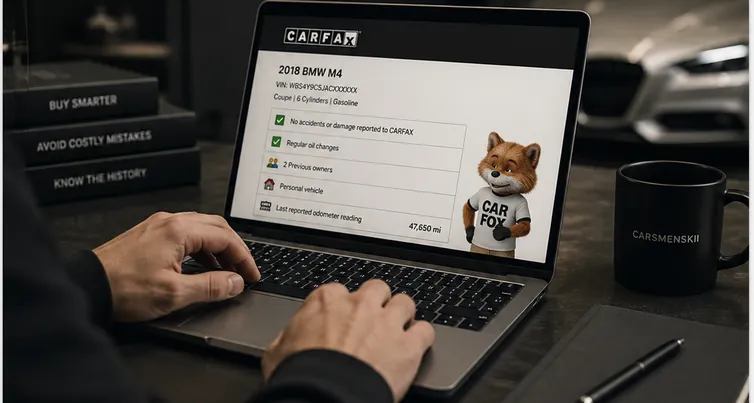
Car theft in the GTA adds another risk: a stolen car with a cloned VIN. Check that the VIN on the dash, the door jamb sticker and the ownership all match, and that none of the stickers look tampered with. A CARFAX Canada report will show the car's registration and accident history across provinces. If the history doesn't fit the story you're being told, trust the history.
The step-by-step process
- Get the VIN and the UVIP before you visit. No UVIP, no visit.
- Run the history. Pull a CARFAX Canada report and check the UVIP's lien section. If the UVIP is a few weeks old, a lien could have been added since, so ask the seller for a current one.
- See the car at the seller's home, at the address on the ownership, in daylight.
- Match the VINs on the dash, the door jamb and the paperwork.
- Test drive it cold, on the highway and over rough roads.
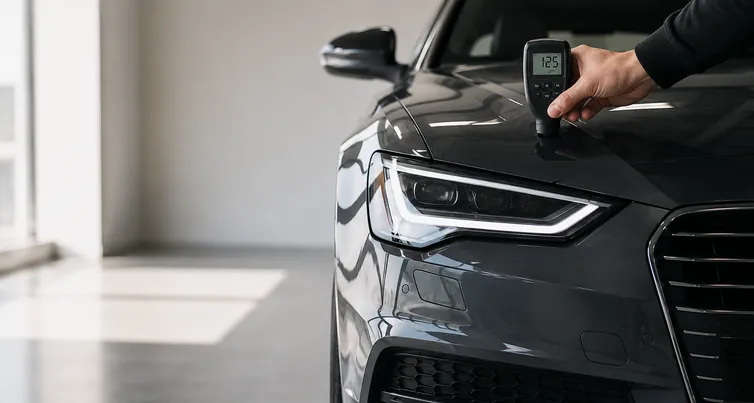
- Get an independent inspection at a shop you choose. Bring a checklist like my 142-point PPI checklist if you want to go through it yourself first.
- Agree on the safety certificate. Either the seller provides a current one, or you knock the expected repairs off the price.
- Pay safely. A bank draft you can verify with the issuing bank, or meet at the seller's branch. Avoid large e-transfers and never pay cash to a stranger in a parking lot.
- Do the paperwork together. The seller signs the ownership and you both complete the bill of sale in the UVIP.
- Insure it, then register it at ServiceOntario. Bring the UVIP, the signed ownership, your ID and proof of insurance. You'll have six days to register, and you'll pay the RST then. You'll need the safety certificate to get plates.
Ontario dropped Drive Clean emissions tests for cars in 2022, so that's one thing you don't need anymore.
Is buying privately worth it?
For a car under about $15,000, often yes. The dealer's margin is a bigger share of the price, and plenty of good cars at that level are sold privately by owners who looked after them. For newer cars, the gap narrows, and a certified pre-owned car with a dealer warranty and promotional financing can come out ahead once you run the numbers.
The savings are only real if you don't buy a problem. Every step above costs less than one bad surprise. If you'd rather not do the hunting yourself, The Match is the part of the job I can take off your plate.
Quick answers
Does a private seller in Ontario have to provide a safety certificate?
No. A private seller can sell a car without a Safety Standards Certificate, which means it is sold as is. You can still register it in your name, but you can't put plates on it until it passes a safety inspection, so budget for any repairs it needs.
How long is an Ontario safety certificate valid?
A Safety Standards Certificate is valid for 36 days after the inspection. If the seller's certificate is older than that, it doesn't count, and the car needs to be inspected again.
How much tax do you pay on a private used car sale in Ontario?
You pay 13% Retail Sales Tax at ServiceOntario when you register the car. In most cases it's charged on the higher of the price you paid or the average wholesale value printed in the UVIP. Transfers between certain family members can be tax-free.
What is a UVIP and who pays for it?
The Used Vehicle Information Package is a document from ServiceOntario with the car's Ontario registration history, lien information, wholesale value and a bill of sale. The seller is required to give it to you, and it costs $20.
How do I avoid curbsiders and scams on Facebook Marketplace?
Make sure the name on the ownership matches the seller's ID, see the car at the address on the ownership, check that the VINs match everywhere, and never pay a deposit on a car you haven't seen. Pay with a bank draft you can verify, not a large e-transfer.
Also on the journal: lease vs buy in Ontario · EV charging in a Toronto condo

Founder of Carsmenskii. BMW Group Canada Aftersales 2018–2021. Based in Toronto, and has looked at more private-sale cars on Kijiji and Marketplace than he cares to count. Book a free 15-min call if you want a second opinion on one.