Short answer: If you need a car in the next six months, don't wait. Chinese brands like BYD, Geely and Chery are aiming for 2027, but none has a Canadian dealer, price list or warranty yet, and none of their cars will get the federal rebate. If you can wait, the smart move is to let them settle in for a few months and then compare prices after rebates.
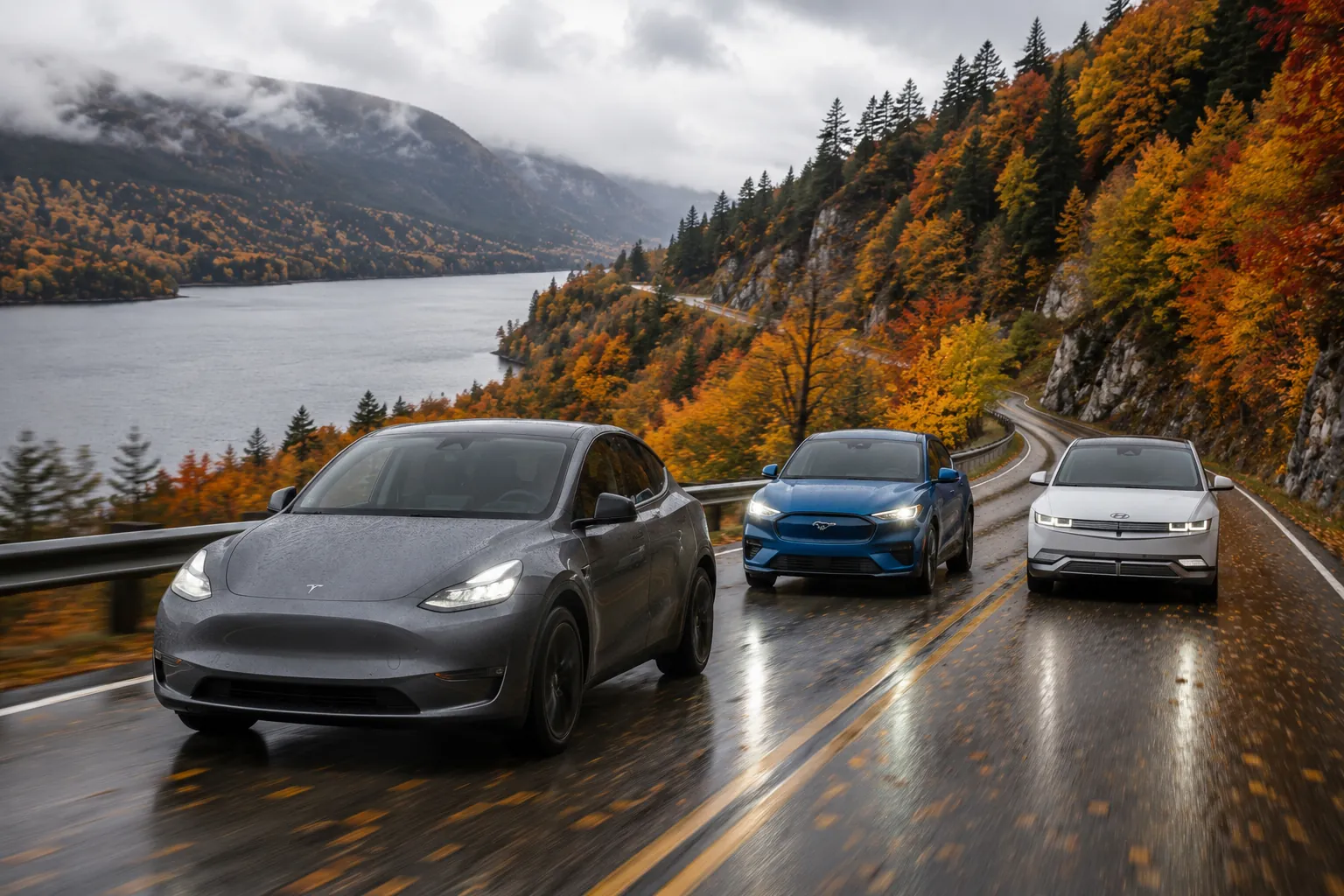
I get asked about this more than almost anything else right now. Usually it's someone who has seen a BYD in a video from Australia or Europe and wants to know if they should hold off on buying an IONIQ 5 or a Model Y. Here's how I see it as of late November 2026.
What changed for Chinese EVs in Canada?
In 2024, Canada put a 100 percent surtax on Chinese-built EVs, on top of the normal 6.1 percent duty. That kept them out. On January 16, 2026, Prime Minister Carney and President Xi agreed to a preliminary trade arrangement, and part of it was an import quota for Chinese-built EVs.
The rules, from Global Affairs Canada and the government's backgrounder:
- 49,000 vehicles in the first year (March 1, 2026 to February 28, 2027), split into two six-month windows of 24,500.
- Inside the quota, the tariff is 6.1 percent. Above it, it's still 106.1 percent.
- The quota grows 6.5 percent a year.
- A growing share is set aside for cars imported at $35,000 or less, reaching about half the quota later this decade.
- Permits are handed out first come, first served.
One thing surprises people. "Chinese EV" here means built in China, not a Chinese brand. That's why the first cars through the door weren't BYDs. Tesla used a big part of the early quota on Shanghai-built Model 3s. Lotus, which Geely owns, brought in Wuhan-built Eletre SUVs. Chery started shipping vehicles in the fall. By October, Tesla had used its share and paused Model 3 Premium orders until more quota opens, which it expects around March 2027.
Who is coming, and when?
As of today, no Chinese brand has a dealer open in Canada. Here's where each one stands. Treat every date as a target.
- Geely: confirmed on October 9, 2026 that its main brand will launch in Canada in 2027. It's building a dealer and service network but hasn't named models, prices or cities.
- Chery (Omoda and Jaecoo): the launch slipped from late 2026 to early 2027. No confirmed models yet. Industry estimates put the Jaecoo J5 and Omoda E5 around $36,000, but those aren't official.
- BYD: still not officially confirmed. Reuters reports sales will likely start in 2027, with dealer recruiting starting in the GTA. BYD has reportedly put the Seagull, Dolphin, Atto 3 and Seal on Canada's pre-examination list, which is an early step, not a launch. The "$25,000 Seagull" story that went around this year traced back to an impostor social media account.
- Dongfeng: held a preview in Montreal in July. Its importer is aiming for early 2027 with the BOX 01 hatchback and the Vigo SUV, both under $35,000.
- Xpeng, Zeekr and NIO: interested, but nothing announced for Canada.
Dealers want in. A broker working with these brands says close to 400 Canadian dealers have asked about selling them. But expect the first year to be small. 49,000 permits sounds like a lot until you remember Canadians buy well over a million new vehicles a year, and Tesla, Volvo and Lotus are competing for the same permits.
Will a Chinese EV get the federal rebate?
No. This is the part most people miss. The federal EVAP rebate only covers cars built in Canada or in a country Canada has a free-trade agreement with. China isn't one. So a China-built car gets no federal money, whether it's a BYD or a Volvo EX30. That's $5,000 this year, or $4,000 if you buy after January 1, 2027.
Provinces vary. Quebec's Roulez vert has no origin rule and has already added the Shanghai-built Model 3 to its list. Manitoba excludes China-made EVs bought after March 19, 2025. The incentives page tracks this month to month.
So always compare after rebates. A $36,000 Chinese crossover against a $40,000 Korean one that gets EVAP is a $1,000 gap, not $4,000.
What are the risks of buying one early?
The cars themselves are good. BYD, Geely and Chery build competitive EVs, and buyers in Europe and Australia have had them for years. The risks are about everything around the car.
Service and parts. Dealers are being signed now, mostly in the GTA, Montreal and Vancouver. Nobody has announced a Canadian parts warehouse. When Chinese brands entered Norway, owners waited a long time for parts in the first couple of years. If you live outside a big city, assume the nearest service bay could be far away at first.
Warranty and resale. No Canadian warranty has been published. Ask for it in writing, and check whether it transfers to the next owner. There's also no Canadian resale data and no insurance claims history, so expect careful trade-in offers and possibly higher premiums at first.
Data and privacy. A federal memo from June 2026 says connected-car data has intelligence value. Canada has no specific rule on Chinese connected-car software yet, while the US is restricting it. Whether that matters to you is your call, but the rules could change.
Politics. The deal is preliminary. Washington objects to it and has tied it to the CUSMA review, and the federal Conservatives have pledged to scrap the quota. Cars already sold would stay legal, but parts, updates and resale could get harder.
Winter. Most affordable Chinese EVs use LFP batteries. They last a long time and you can charge them to 100 percent, but they charge slowly when cold and lose more range in deep cold. Make sure a heat pump and battery preconditioning are standard.
So should you wait?
Here's what I'm telling clients:
- Need a car before spring? Buy now. Pick from what's on sale with a full rebate, and if it's an EV, get the deal papered before December 31 to lock in the $5,000.
- Can wait until late 2027? Watch. Don't buy in a brand's first month. Wait for a dealer near you, a Canadian warranty in writing, and a few months of owner reports.
- Going early anyway? Lease instead of buying. The lender carries the resale risk, which matters when nobody knows what these cars will be worth in three years.
- Only switch for real money. I'd want at least $5,000 to $8,000 less than the Korean or Japanese EV you'd otherwise buy, after rebates, to cover the extra risk.
A Chinese EV is a good fit for a city or suburban driver with home charging, a second car, or a three-year lease. I'd wait if you live far from a big city, keep cars ten years, cross into the US often, or if data privacy is a deal-breaker for you.
Quick answers
When is BYD coming to Canada?
BYD has not officially confirmed a Canadian launch date. Reuters has reported that sales will likely start in 2027, and BYD has reportedly put several models, including the Seagull, Dolphin, Atto 3 and Seal, on Canada's pre-examination list. There is no Canadian price list yet.
What is the tariff on Chinese EVs in Canada?
Inside the quota of 49,000 vehicles a year, Chinese-built EVs pay the normal 6.1 percent duty. Anything imported above the quota still pays 106.1 percent, which is the 6.1 percent duty plus the 100 percent surtax Canada added in 2024.
Do Chinese EVs qualify for the federal EV rebate?
No. The federal EVAP rebate only covers vehicles built in Canada or in a country Canada has a free-trade agreement with. China isn't one, so no China-built car qualifies, whatever the brand. Quebec's Roulez vert has no origin rule; Manitoba excludes China-made EVs.
Should I wait for a Chinese EV or buy something now?
If you need a car in the next few months, buy now. If you can wait, wait until a brand has a dealer near you, a published Canadian warranty and a few months of owner reports. Then only buy if it is at least $5,000 to $8,000 cheaper after rebates than the equivalent Korean or Japanese EV.
For the full pre-signing checklist (service, warranty, rebates, winter, charging, insurance, software and your exit plan), see Chapter 21 of the Canadian EV Buyer's Bible. It's updated as brands confirm Canadian details, and updates are free.
Also on the journal: EV charging in a Toronto condo · the best time to buy a car in Canada

Founder of Carsmenskii. BMW Group Canada Aftersales 2018–2021. Wrote the EV Bible's chapter on Chinese EVs and updates it as brands confirm Canadian details. Book a 15-min call if you're deciding between waiting and buying now.